Manhattan Beach, California
Every child’s learning style is unique.
Individualized, evidence-based intervention grounded in neuroscience — for neurodivergent and neurotypical children in TK through 5th grade.
Our Story
Rooted in Experience
At Bloom Education Specialists, we believe every child’s learning style is unique and deserves an approach that meets them where they are, whether that’s through enrichment or remediation. The multidisciplinary experts at Bloom bring years of experience across a variety of settings, working with a wide range of learners including neurotypical and neurodivergent students. We create a highly relational partnership between families, students, and allied professionals, tailoring support to each child’s needs so every child can grow with confidence.
Meet Our Founder
Danielle Royer, M.A.
Educational Therapist #1485
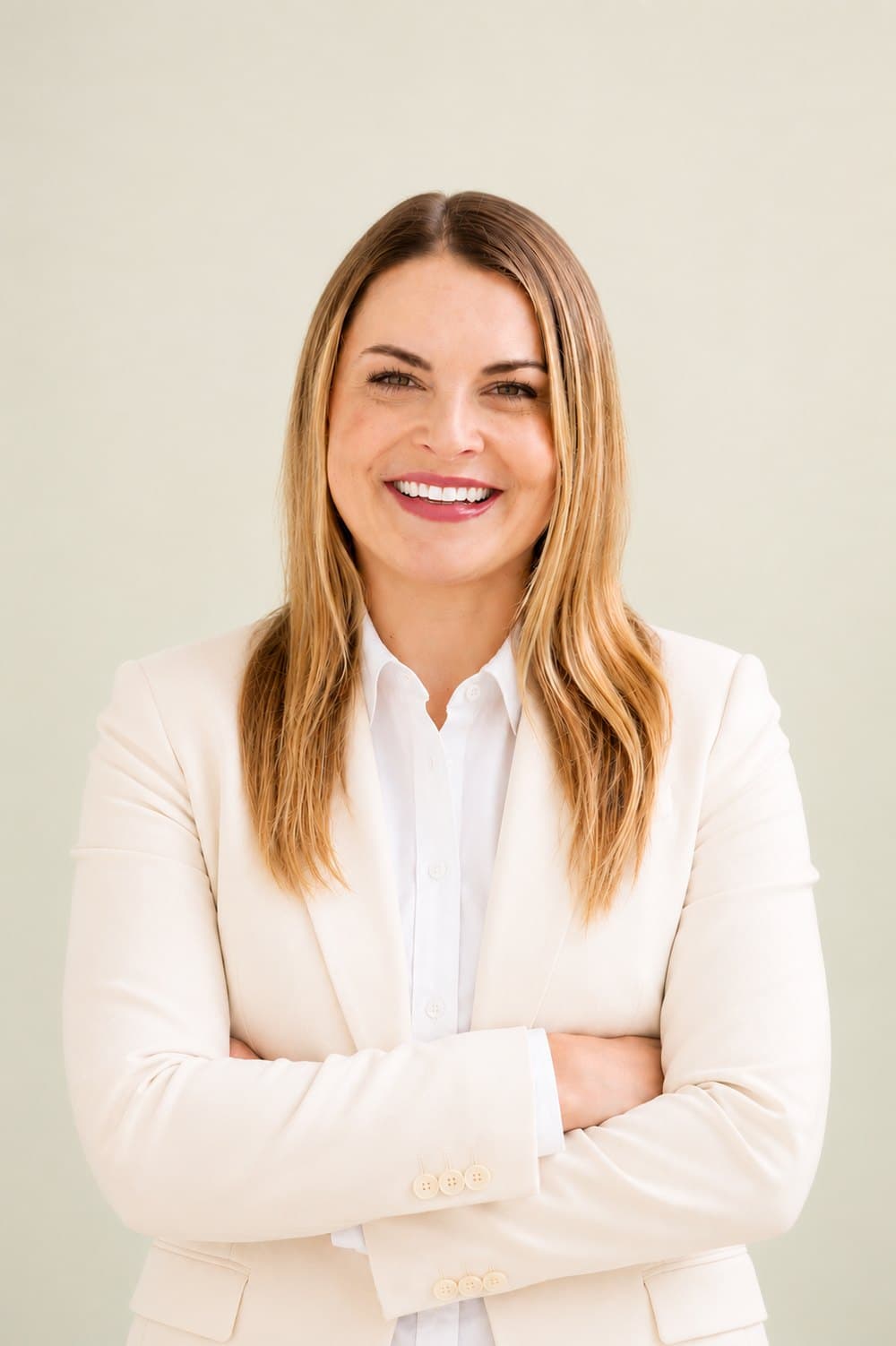
I am an Educational Therapist and credentialed Special Educator with over a decade of experience helping children with learning differences develop the skills and confidence they need to thrive. I founded Bloom Education Specialists to provide individualized, evidence-based intervention grounded in neuroscience and tailored to each child’s unique learning profile.
My work specializes in supporting students with dyslexia, ADHD, executive functioning challenges, language-based learning differences, and other neurodevelopmental learning needs. I integrate the Science of Reading with structured literacy approaches, including Wilson Reading System and Orton-Gillingham principles, alongside cognitive and language-based interventions to strengthen the underlying processes that support reading, writing, language, and learning.
I believe meaningful progress happens when intervention goes beyond teaching academic skills. By understanding how each child’s brain learns, collaborating closely with families and schools, and creating supportive, strengths-based relationships, I help students build lasting independence, resilience, and confidence.
In addition to working directly with students, I mentor and train educators in evidence-based literacy instruction and am passionate about making neuroscience-informed practices accessible to teachers, tutors, and families.
What We Do
Six ways we support a learner.
- 01
Educational Therapy
Designed for Neurodivergent Children
Educational therapy is designed for children who are struggling to access the general education curricula due to impeding learning differences such as dyslexia, dysgraphia, dyscalculia, ADHD, autism, and more. These clients require intervention that considers their unique learning style and factors in how their emotional wellbeing and cognitive processes impact their ability to acquire skills.
Read more - 02
Specialized Tutoring
Designed for Neurotypical Children
Specialized tutoring is designed for clients who may require additional repetition to master skills that their class has moved on from. It’s also for children who require enrichment because they have surpassed grade-level skills. Parents who seek this service are typically interested in making certain their child is meeting or exceeding reading benchmarks.
Read more - 03
Academic Testing
Formal and Informal Assessment
Academic testing is a critical component to designing individualized plans. Formal assessment results indicate how your child compares to same-aged peers based on national norms. Informal assessments align with skills related to curricula and are a part of the intake process for all new clients.
Read more - 04
Educational Consulting
Power in Collaboration
Educational consulting can take place in a variety of settings including school meetings, conversations with other allied professionals on the child’s team, or between Bloom Education Specialists and parents. We believe in empowering parents and professionals and creating cohesion amongst the child’s team to ensure each client reaches their full potential.
Read more - 05
IEP Development and Advocacy
Supporting Families Through the Process
Navigating the IEP process can be overwhelming for families. We help parents understand their child’s rights, prepare for IEP and 504 meetings, review evaluations and goals, and advocate for services that truly meet their child’s needs. Whether attending meetings alongside you or helping you prepare questions in advance, we make sure you feel confident and equipped to advocate for your child every step of the way.
Read more - 06
Speaking & Training
Sharing Expertise Beyond the Classroom
Bloom Education Specialists offers literacy trainings for educators, schools, and parent groups, sharing evidence-based strategies rooted in the Science of Reading. Available for workshops, professional development sessions, and speaking engagements on topics including literacy instruction, learning differences, and individualized education planning.
Read more
In Their Words
From families we work with.
“Danielle has a gift for connecting with children. She’s patient and kind and knows how to adapt her approach to fit my child’s unique needs. She doesn’t just help with academics. She builds confidence and makes learning enjoyable.”
Parent, Third Grade Client
“We are so incredibly grateful to have found Danielle. Before working with her, we were feeling lost and unsure of how to best support our daughter’s learning. Thanks to her expertise, patience, and unwavering guidance, our daughter is now reading at grade-level.”
Parent, First Grade Client
“Two of our children have had the privilege of working with Danielle, and their knowledge and understanding of phonics has drastically improved. She is extremely organized, and keeps our children engaged and interested in their work. She makes it fun!”
Parent, Kindergarten and First Grade Clients
“Danielle has been an absolute gift to our family. Her deep expertise allowed her to quickly assess our son’s needs and engage him in a way that is both effective and enjoyable. She is so much more than a tutor. She has been a dedicated advocate for our son and a trusted guide for my husband and me as we navigate how to best support his growth.”
Parent, Fourth Grade Client
Questions, Answered
What parents ask us.
What’s the difference between an educational therapist and a tutor?
While both educational therapists and tutors support students academically, educational therapy looks beyond what a child is learning to understand why learning feels difficult.
A tutor typically focuses on helping students master classroom content, complete assignments, prepare for tests, or improve grades.
An educational therapist combines evidence-based instruction with an understanding of how the brain learns. We assess the underlying cognitive and language processes that support reading, writing, math, executive functioning, and learning. Rather than simply teaching today’s homework, educational therapy identifies the root cause of a student’s struggles and builds the skills needed for lasting, independent success.
At Bloom Education Specialists, we provide both educational therapy and specialized tutoring because every child has different needs. Some students simply need targeted academic support, while others benefit from intervention that addresses the underlying learning processes contributing to their difficulties.
Who are educational therapy and specialized tutoring services for?
Our services are designed for students who are bright, capable learners but need more individualized instruction than they’re receiving in the classroom.
We commonly work with students who:
- Struggle with reading, writing, spelling, or math
- Have dyslexia, dysgraphia, dyscalculia, ADHD, or other learning differences
- Need support with executive functioning, organization, or study skills
- Have language processing or working memory weaknesses
- Have fallen behind academically or lost confidence in school
- Need enrichment or individualized instruction that isn’t available in the classroom
Whether your child has a formal diagnosis or you’re simply noticing that learning requires significantly more effort than it should, we’re here to help.
Where will educational therapy and specialized tutoring services occur?
Services are provided in your home or at another mutually agreed-upon location that best supports your child’s learning.
Working with students in their own environment allows learning to feel more comfortable, familiar, and connected to everyday life. Children are often more relaxed and willing to take academic risks when they’re in a space where they feel safe, which helps us build the trusting relationship that meaningful learning depends on.
In-home sessions also allow for more natural communication and collaboration with parents. Rather than relying solely on emails or occasional check-ins, we have regular opportunities to discuss progress, answer questions, model strategies, and problem-solve together. This partnership ensures that everyone involved in your child’s education is working toward the same goals.
Being in your child’s environment also gives us valuable insight into how they learn, stay organized, and approach schoolwork. We can recommend practical strategies that fit seamlessly into your family’s routines, making it easier to carry learning beyond our sessions.
At Bloom Education Specialists, we believe that lasting growth happens when evidence-based instruction is paired with strong relationships not only with students, but with their families as well. Our goal is to become a trusted member of your child’s support team, helping every child build the skills and confidence needed to thrive both in and beyond the classroom.
What is the Science of Reading and how will it help my child learn to read and write?
The Science of Reading is a large body of decades of interdisciplinary research that explains how the brain learns to read. It draws from neuroscience, psychology, linguistics, cognitive science, and education to identify the instructional approaches that are most effective for developing skilled readers.
Rather than relying on guessing strategies or memorization, Science of Reading instruction explicitly teaches the foundational skills students need to become successful readers and writers. These include phonological awareness, phonics, decoding, fluency, vocabulary, language comprehension, spelling, and written language.
At Bloom Education Specialists, we use structured, evidence-based instruction grounded in the Science of Reading to help students develop accurate, fluent reading and confident writing. Our goal isn’t simply to help students improve on today’s assignment. It’s to build the foundational skills that allow learning to become easier over time.
Are you able to work with my child who is struggling in math?
Yes. We support students experiencing a wide range of math difficulties, from foundational number sense to problem solving and higher-level concepts.
Our approach begins by identifying why math is challenging. Some students need explicit instruction in mathematical concepts, while others struggle because of weaknesses in language processing, working memory, visual-spatial skills, processing speed, executive functioning, or fact fluency.
By understanding each student’s learning profile, we can provide targeted, evidence-based instruction that builds both confidence and mathematical understanding.
If my child reverses b and d, does that mean they are dyslexic?
Not necessarily.
Letter reversals are common as young children learn to read and write and, by themselves, are not a sign of dyslexia.
Persistent reversals beyond the early elementary years may indicate that a child would benefit from further evaluation, but dyslexia is characterized by difficulties with accurate and fluent word reading, spelling, and phonological processing.
If your child is also struggling to sound out words, read fluently, spell, or remember letter-sound relationships, it may be appropriate to pursue a comprehensive evaluation.
If you’re unsure whether your child’s reading development is following an expected path, we’d be happy to discuss your concerns and help determine the next best steps.
Individualized Learning. Evidence-based instruction. Lasting Growth.
Tell us a little about your child and we will get back to you.